1. Optical Performance & Lens Technology
- Impact Resistance (Polycarbonate / Trivex): Lenses must be shatterproof to protect eyes from flying gravel, bugs, road spray, and fall impacts. Polycarbonate is the industry standard.
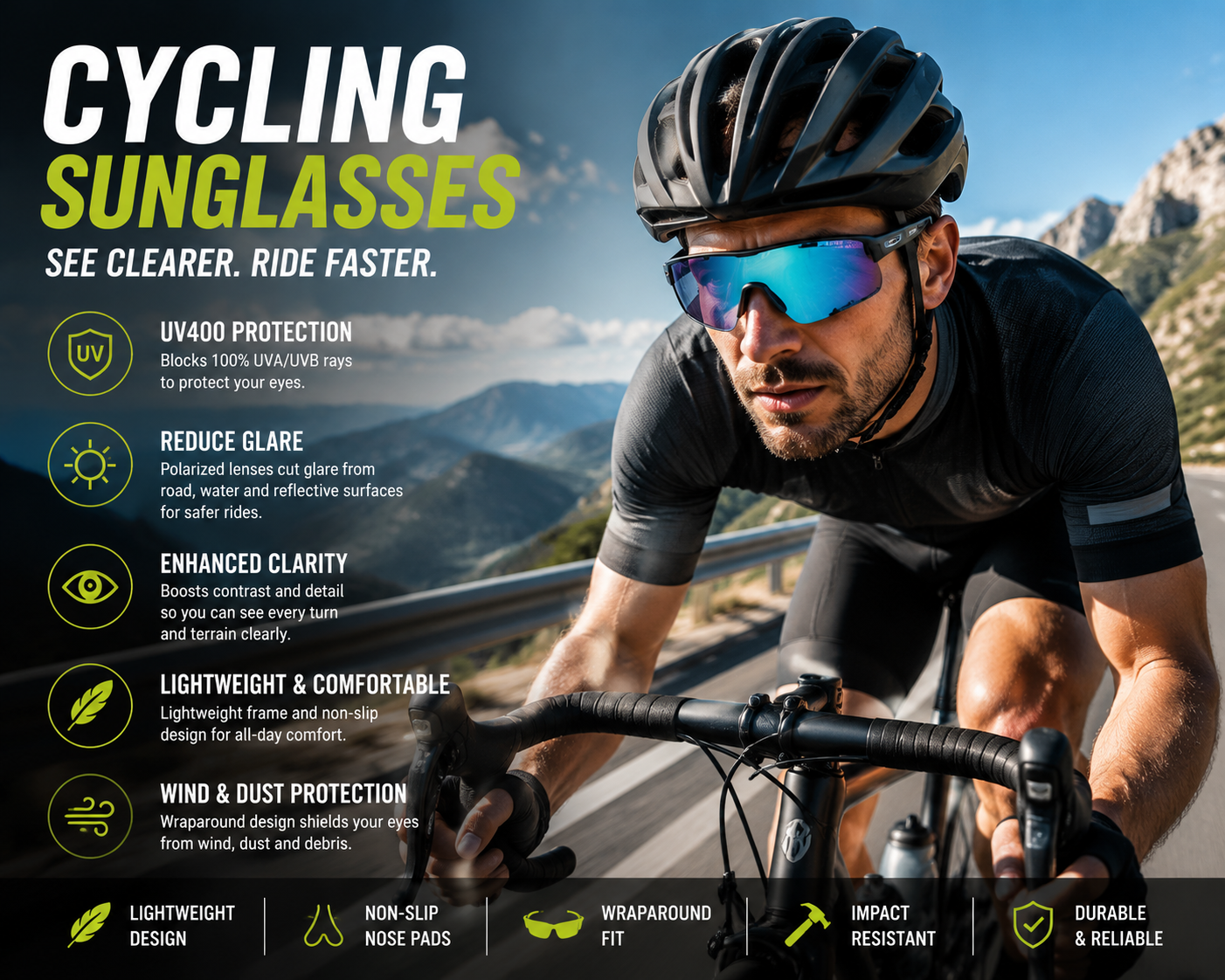
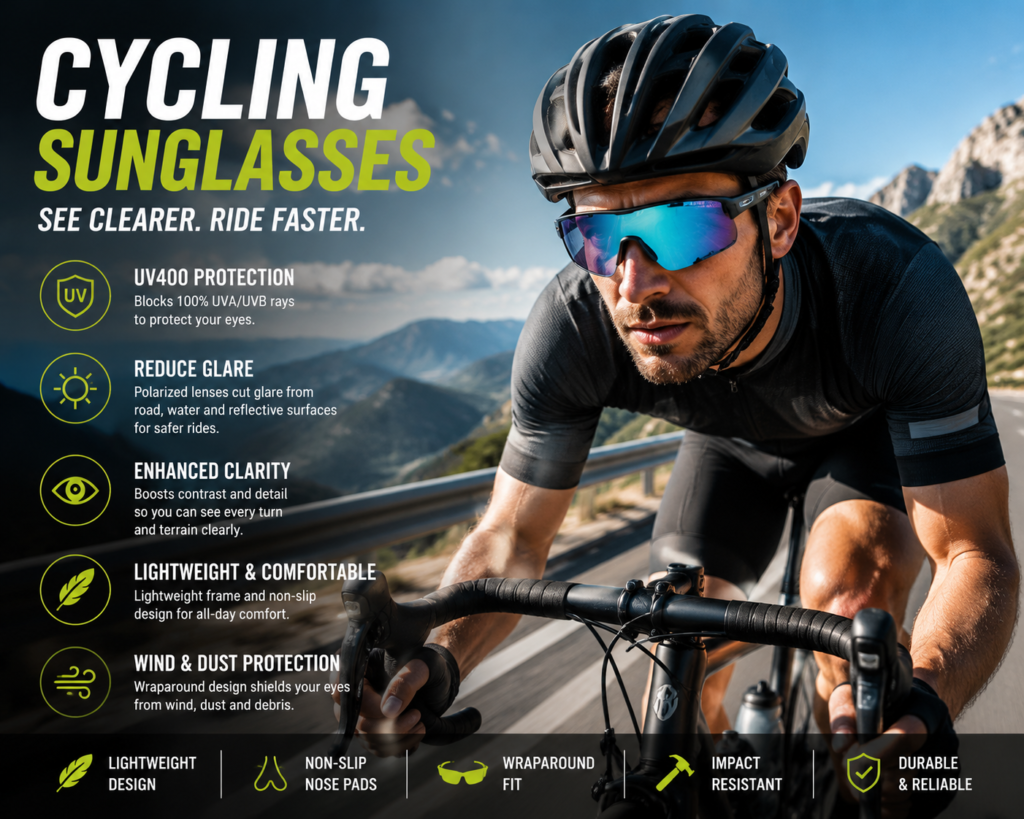
- UV400 Protection: Essential 100% protection against UVA and UVB rays up to 400 nm.
- Photochromic vs. Fixed Tint Lenses:
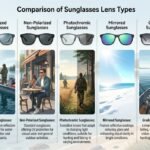
- Photochromic (Self-Tinting): Highly preferred for changing light conditions (forest trails, mountain passes, dusk/dawn) as they automatically transition between Cat 0/1 (clear/light) and Cat 3 (dark).
- Categorized Fixed Tints: Lenses range from Category 0 (night/rain) to Category 3 (bright sunny road conditions).
- Polarization (Conditional Use): While polarized lenses block road glare, many road cyclists avoid high-level polarization because it can obscure oil slicks, wet patches, or make bike computer displays hard to read.
- Hydrophobic & Oleophobic Coatings: Repels water drops, rain, sweat, dust, and fingerprint oil to maintain clear vision in wet weather.
2. Coverage, Aerodynamics & Field of Vision
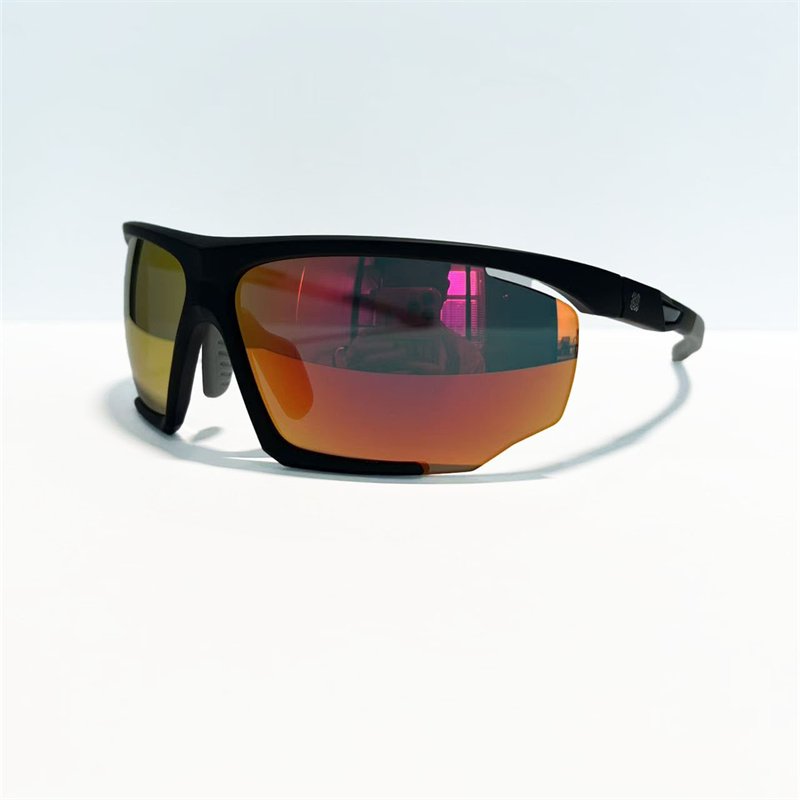
- Wide Shield / Single-Lens Design: Oversized, cylindrical or spherical shield lenses eliminate frame-edge obstruction, ensuring an uninterrupted field of view when riding in an aggressive drop position.
- Wraparound Coverage: Curved designs hug the contours of the face to block wind, peripheral glare, side dust, and tear-inducing drafts at high speeds.
- Rimless / Semi-Rimless Options: Half-rim or frameless bottom edges improve lower peripheral vision (checking rear wheels, shoulders, and gears) and increase airflow.
3. Frame Material & Weight
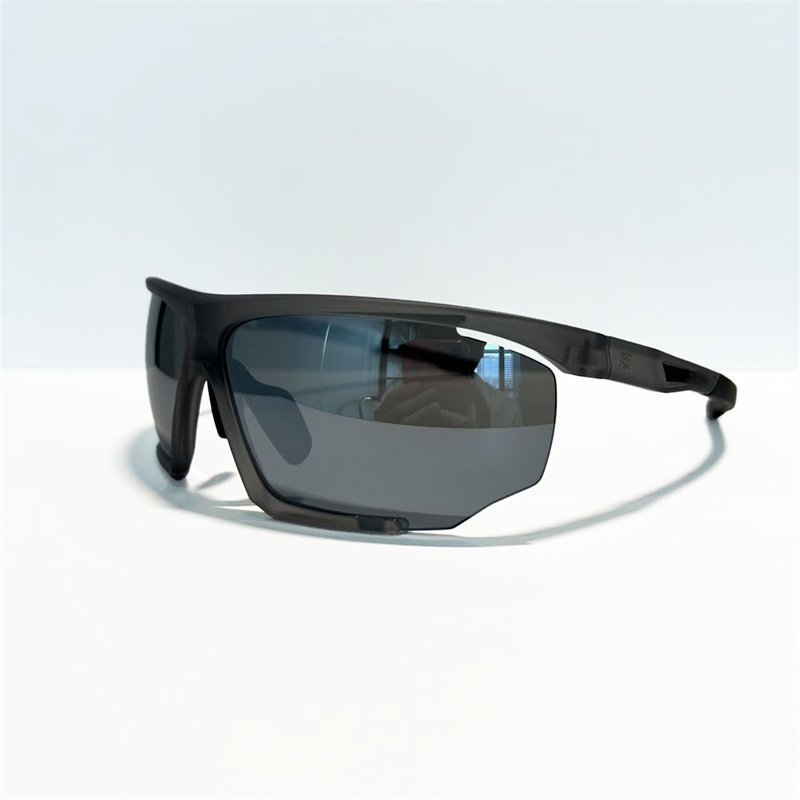
- TR90 (Grilamid) Frame: The gold-standard thermoplastic frame material—extremely lightweight (~25–35g), flexible, heat-resistant, and crash-durable.
- Shatterproof Flexibility: Frames must yield upon impact without breaking into dangerous sharp fragments.
4. Fit & Ergonomics
- Helmet Compatibility: Thin, low-profile, flexible temples (arms) that fit smoothly underneath bicycle helmet retention systems and straps without causing painful temple pressure points.
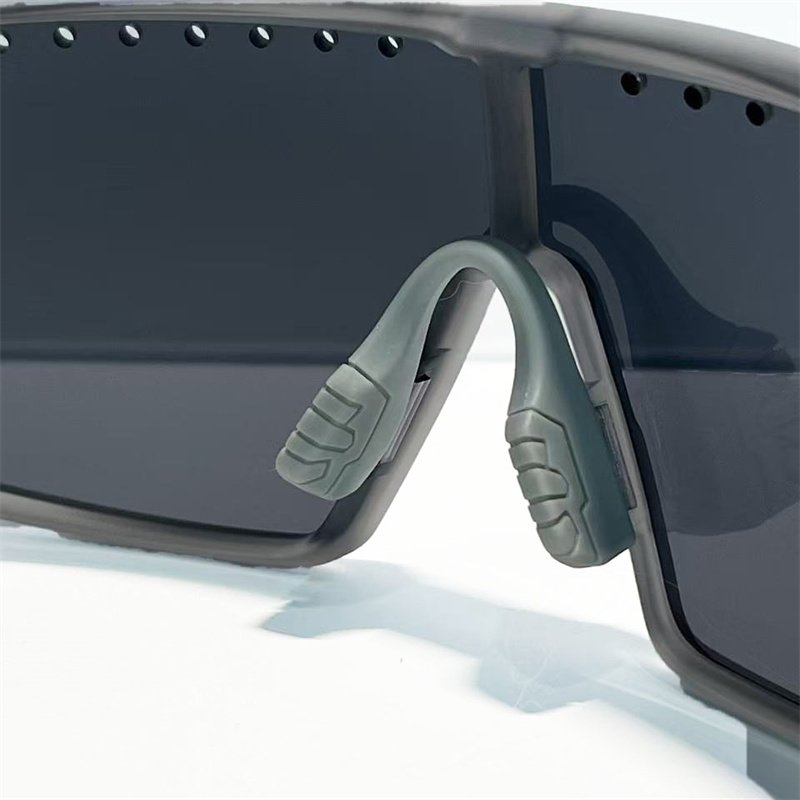
- Hydrophilic Rubber Grip: Adjustable nose pads and temple tips made of hydrophilic rubber (e.g., Megol or Unobtainium) that increase grip as sweat accumulates.
- Customizable Adjustability: Bendable core-wire temples and adjustable nose bridges to accommodate different face shapes and nose bridge heights.
5. Airflow & Anti-Fog Vents
- Strategic Ventilation Channels: Precision-cut air vents along the upper edge, sides, or bottom of the lens to maintain air circulation and prevent fogging during high-exertion climbs.
- Anti-Fog Lens Coating: Chemical anti-fog treatments on the inner lens surface to handle heat-and-humidity temperature spikes.
stacy@willchics.com |www.willchics.com