
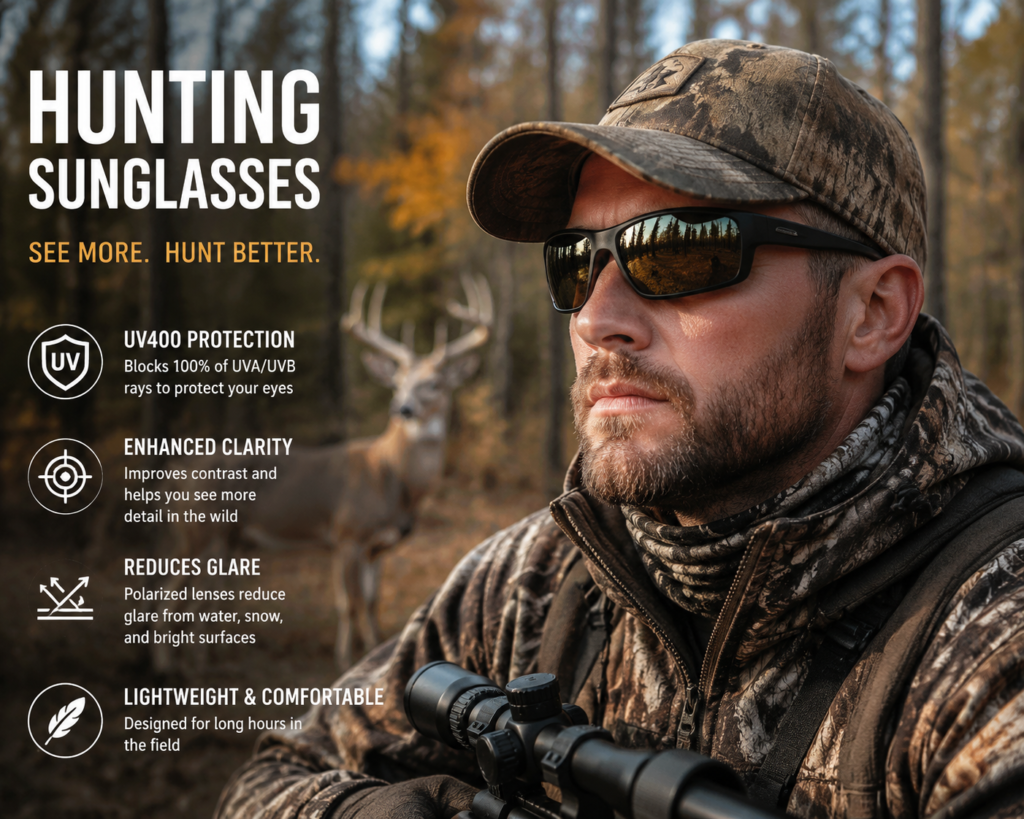
1. Ballistic Impact Safety & Standards
Safety is the single most critical requirement for hunting eyewear to protect against flying debris, ejected shell casings, ricochets, and stray pellets/branches.
- ANSI Z87.1+ (US Civil Standard): High-velocity and high-mass impact resistance rating required for standard shooting safety.
- MIL-PRF-32432A (US Military Standard): Ballistic impact resistance capable of withstanding high-velocity projectiles (tested at speeds over 600–700 fps).
- EN 166 F/B (European Standard): European safety standard for personal eye protection against high-speed particles.
2. Lens Material & Durability
- Shatterproof Polycarbonate: The industry standard for hunting lenses due to its extreme impact resistance and lightweight properties.
- Trivex / NXT Material: Offers superior optical clarity and ultra-high impact resistance, though slightly more expensive than standard polycarbonate.
- Scratch-Resistant Coating: Hard outer coating to withstand rough wilderness conditions, brush, and dust.
3. Optical Performance & Lens Colors
Lens tints must adapt to different terrain, lighting, and game target contrast:
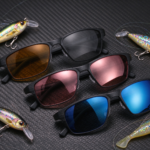
- Yellow / Amber / Gold: Ideal for fog, overcast days, or low light (dawn/dusk); highlights target contrast against green or brown backgrounds.
- Clear: Best for dense woods or night/dawn hunting where maximum light transmission is needed.
- Bronze / Copper / Brown: Enhances red and green spectrums; ideal for bright sunlight in fields or woods.
- Vermilion / Purple: Filters out green backgrounds (foliage) to bring out orange clays or natural brown game hues.
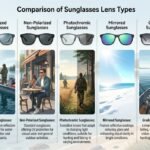
- Polarized Lenses (Conditional): Great for waterfowl hunting (eliminates water reflection), but avoided by some shooters as polarization can alter depth perception or interfere with illuminated optics/red dot sights.
4. Anti-Fog & Climate
Temperature fluctuations between cold outdoor air and body heat cause severe fogging without proper design:
- Permanent Anti-Fog Coating: Hydrophobic or hydrophilic chemical treatment applied to inner lens surfaces.
- Ventilation Ports / Airflow Channels: Frame vents designed to channel air behind the lens without exposing eyes to wind or debris.
5. Frame Ergonomics & Tactical Design
- Low-Profile & Flexible Temples: Thin, flat temples (arms) that fit comfortably under hearing protection, ear defenders, or helmets without breaking the ear seal.
- Wrap-Around Fit: Full peripheral coverage to prevent side glare, wind, dust, and flying debris from entering from the side.
- Non-Slip Grip: Rubberized nose pads and temple tips (frequently made of hydrophilic rubber) that grip tighter as the hunter sweats.
- Matte / Non-Reflective Finish: Frame surfaces must be matte (black, camo, olive drab, coyote tan) to avoid solar reflections that could spook game animals.
stacy@willchics.com |www.willchics.com